

Wedding Venues on the Amalfi Coast: A Guide to Italy’s Most Distinctive Settings
Wedding venues on the Amalfi Coast range from intimate 18th-century watchtowers in Positano to clifftop palaces in Ravello. Each town has a different feel, a different set of logistics, and a different photographic character. This guide covers the venues worth knowing, how to choose between them, the seasons that actually work, and what nobody tells you until you’re already planning. Read this before you open a single venue brochure.
The Amalfi Coast gets into your head the way few places do. One photograph of a terrace above the sea, and suddenly you can’t imagine getting married anywhere else.
What those photographs don’t show: the narrow roads, the noise curfews, the venues that book out 18 months in advance, and the very real difference between a wedding in Positano and a wedding in Ravello. Both are on the same coast. Both are extraordinary. They are not the same experience.
Here is what you need to know.
Why the Amalfi Coast Works So Well for Weddings
The short answer: nowhere else in Italy puts so much historic venue stock in such a small stretch of coastline. Former monasteries, medieval palazzos, 18th-century watchtowers, aristocratic villas — all within 55 kilometres, all looking out at the Tyrrhenian Sea.
The longer answer involves light. The Amalfi Coast sits on a south-facing arc of cliff. In the late afternoon, the sun drops behind the mountains and the coastline glows. Terraces that face the open sea catch this light in a way that is almost unfair to photograph. I have stood on the terrace at Villa Magia in Positano at 5pm and watched the Gulf go from blue to copper in under twenty minutes.
It also helps that destination wedding couples have been coming here for three centuries. The local infrastructure — planners, florists, caterers — is built around international weddings. That experience shows on the day.
Positano, Ravello or Amalfi Town?
These three towns anchor most Amalfi Coast wedding decisions. They are not interchangeable.
Positano is the one you have seen in every photograph. Pastel houses stacked on a cliff. The ceramic dome of the Church of Santa Maria Assunta. Terraced gardens dropping toward the sea. It suits intimate weddings — typically under 80 guests — where the town becomes part of the event. Roads are narrow, parking is nonexistent, and guests with mobility requirements will struggle. When it works, it works completely.
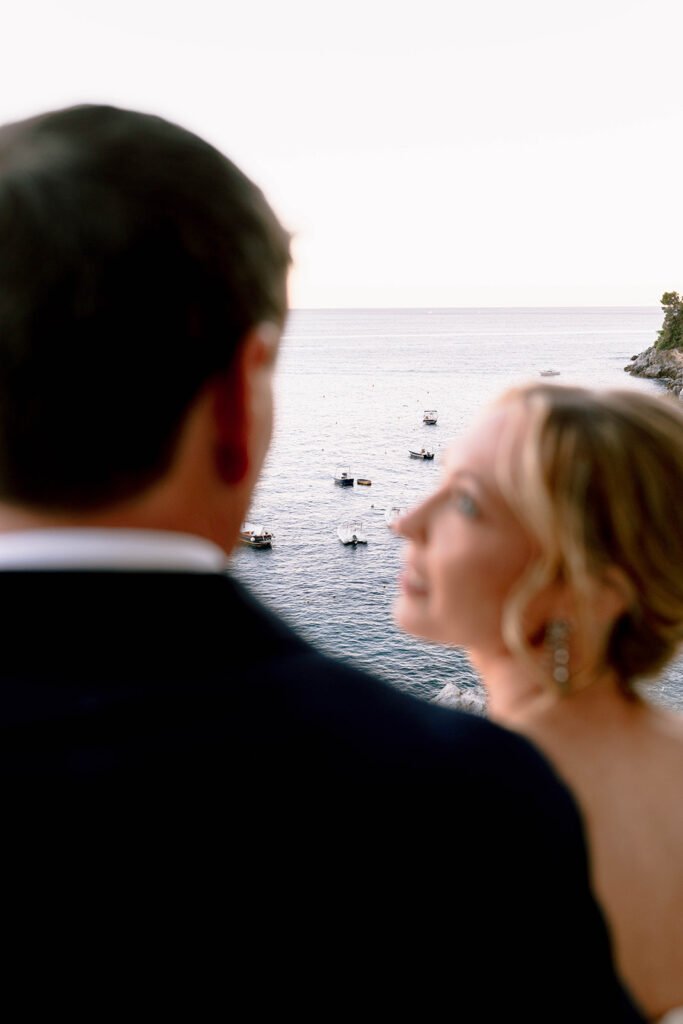
My favourite thing about shooting in Positano is the layering. There is always something in the frame — a rooftop, a bougainvillea, a boat far below. You don’t need to compose much. The town does it for you.
Ravello sits 350 metres above the coast. The elevation buys you quiet and perspective. Views from Ravello’s terraces look directly out to the open sea, nothing in the way. The venue stock here is the strongest on the coast: Villa Cimbrone, Palazzo Avino, and Belmond Hotel Caruso are all in Ravello. If you want the most dramatic light and the most editorial setting, this is your town. Amalfi town is the most accessible point on the coast and the most practical for larger groups. The Grand Hotel Convento is here. Civil ceremonies are more straightforward to arrange than in Positano or Ravello — worth confirming early if legal recognition in Italy matters to you.
The Venues Worth Knowing
The Amalfi Coast’s most requested wedding venues each have a distinct character. These are the properties that come up again and again — and the things I have learned from photographing at them.
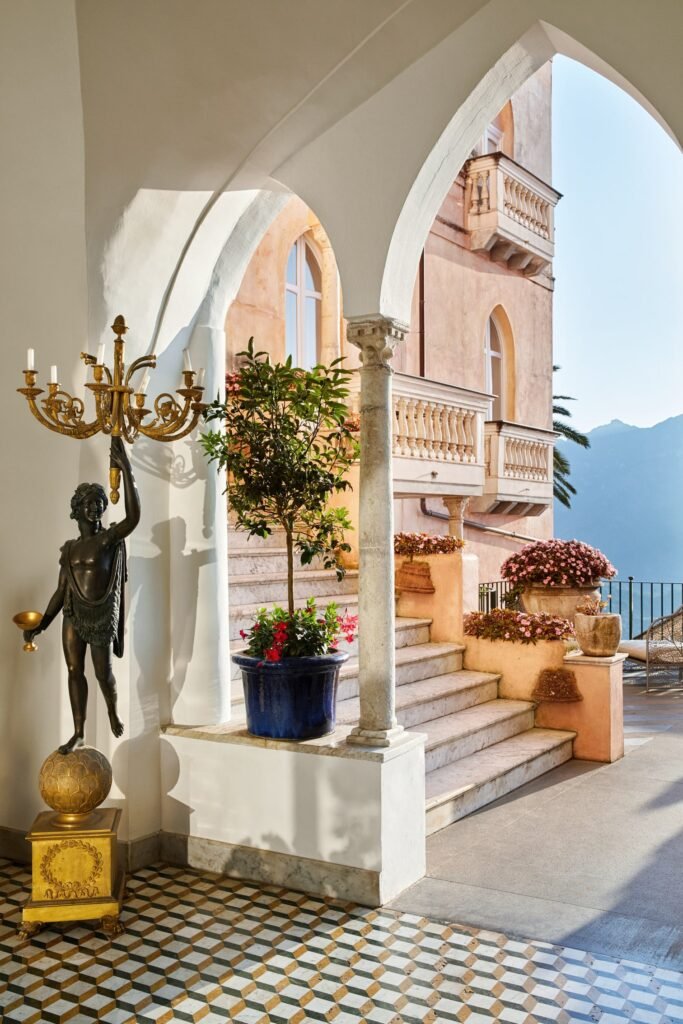
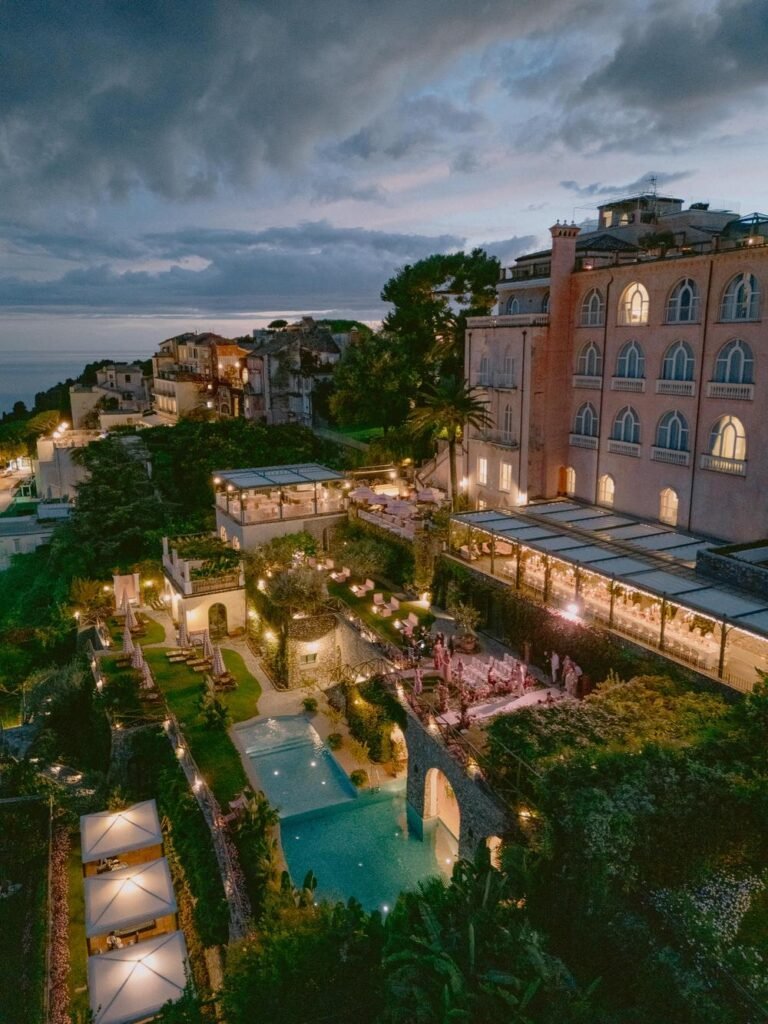
PALAZZO AVINO — Ravello
For whom: Couples who want the full Ravello experience without the largest property on the coast
Why I love it: The pink facade photographs beautifully in the golden hour, and the terraced gardens face directly out to sea
A 12th-century villa turned five-star hotel, tucked into the hillside above Ravello. Michelin-starred restaurant on site. Compact scale suits curated, detail-focused celebrations — the kind where every element has been considered. Best for 30–80 guests.
GOOD TO KNOW: The facade facing the road is extraordinary at dawn before guests arrive. Worth scheduling an early arrival shoot here.
VILLA CIMBRONE — Ravello
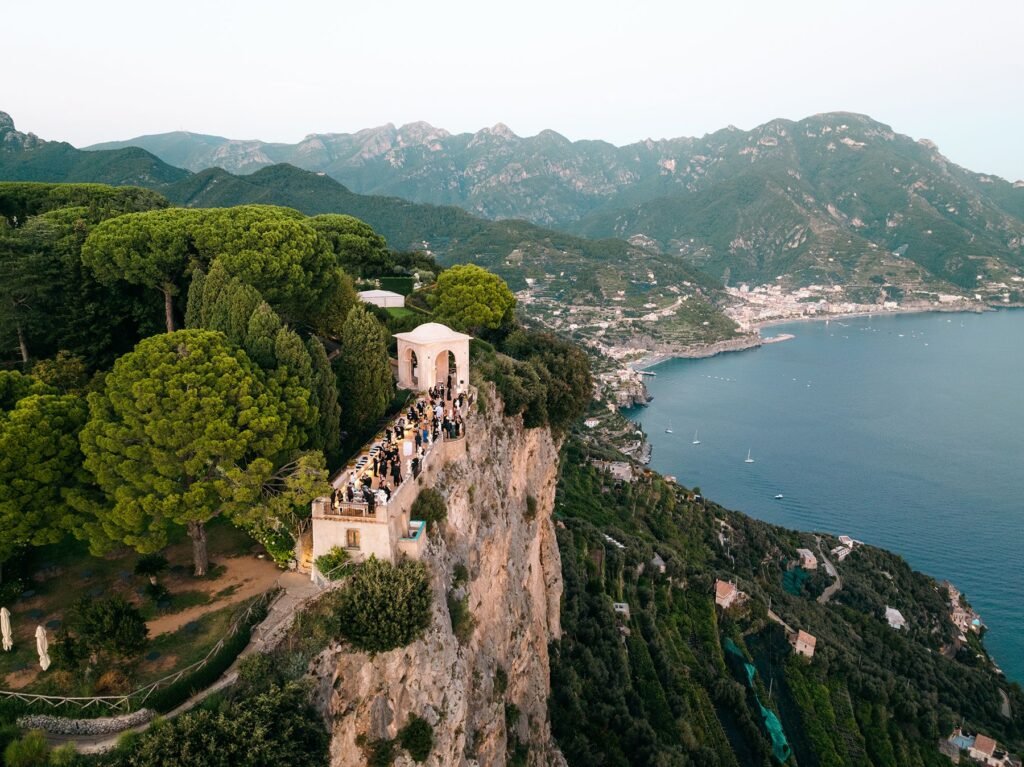
For whom: Couples who want one of the most iconic ceremony settings in Italy
Why I love it: The Bellavista terrace is lined with classical marble busts and drops straight to the sea. There is nowhere else quite like it.
A 12th-century palace thought to be built on Roman ruins, a 10-minute walk from Ravello’s centre. The terrace is west-facing, which makes late afternoon the hour to plan around. 19 guestrooms. Up to 150 guests across multiple spaces. You can see how Positano venues translate on camera in my Villa Magia gallery from Positano — Ravello, which operates at the same level with more compositional openness.
GOOD TO KNOW: Build your ceremony around 4:30–5:30pm in summer for the light you want. This terrace is west-facing. Midday here is flat.
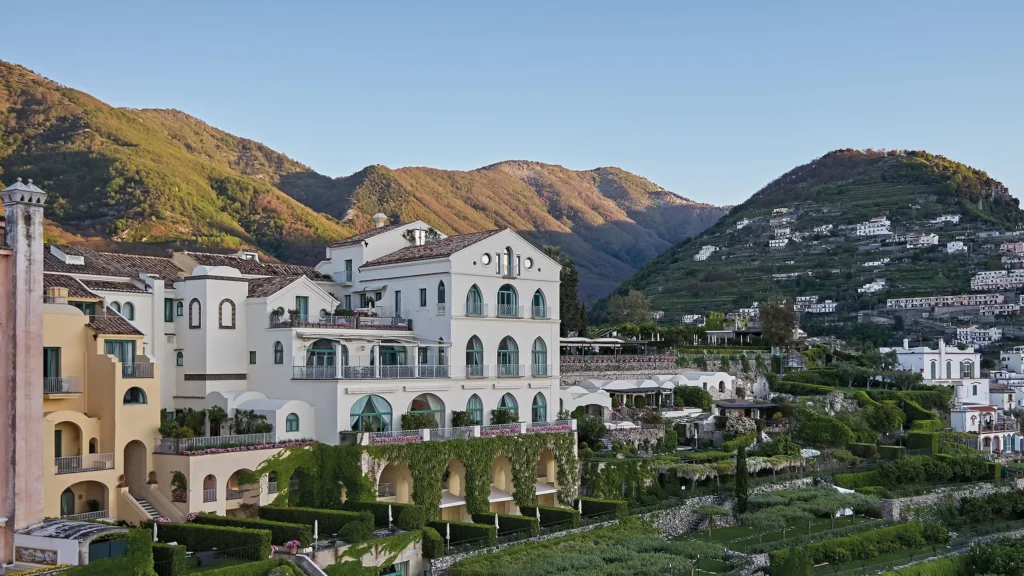
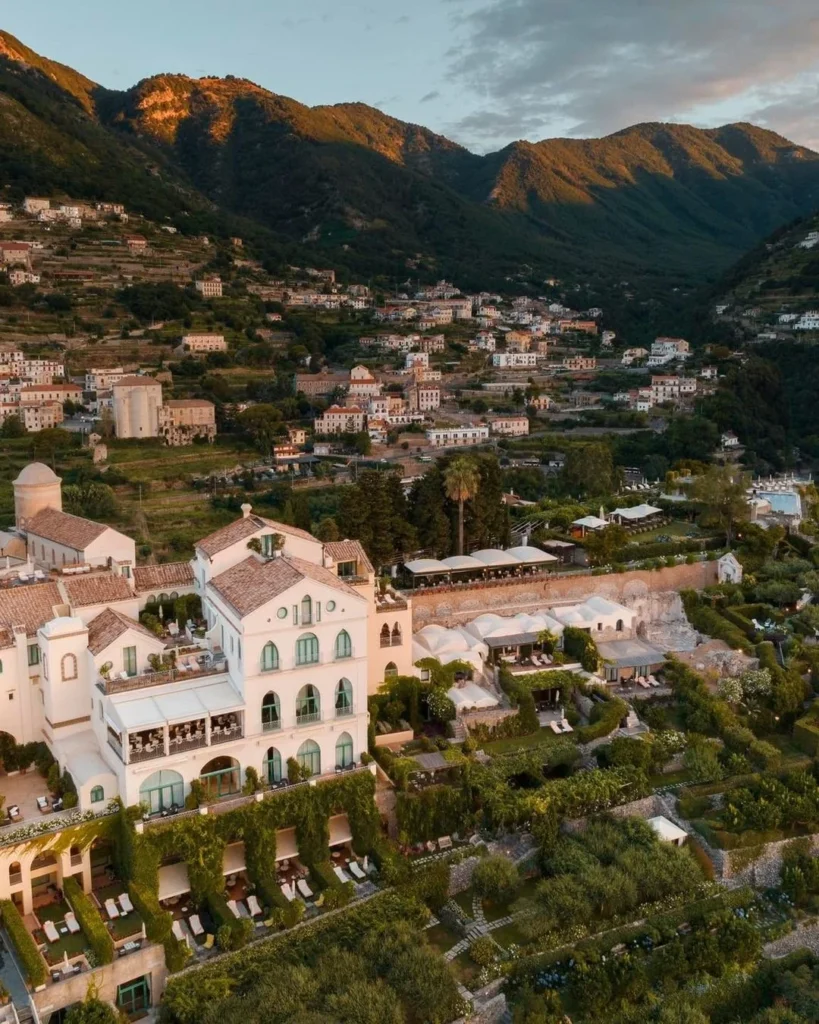
BELMOND HOTEL CARUSO — Ravello
For whom: Couples who want to take over an entire five-star hotel for a wedding weekend
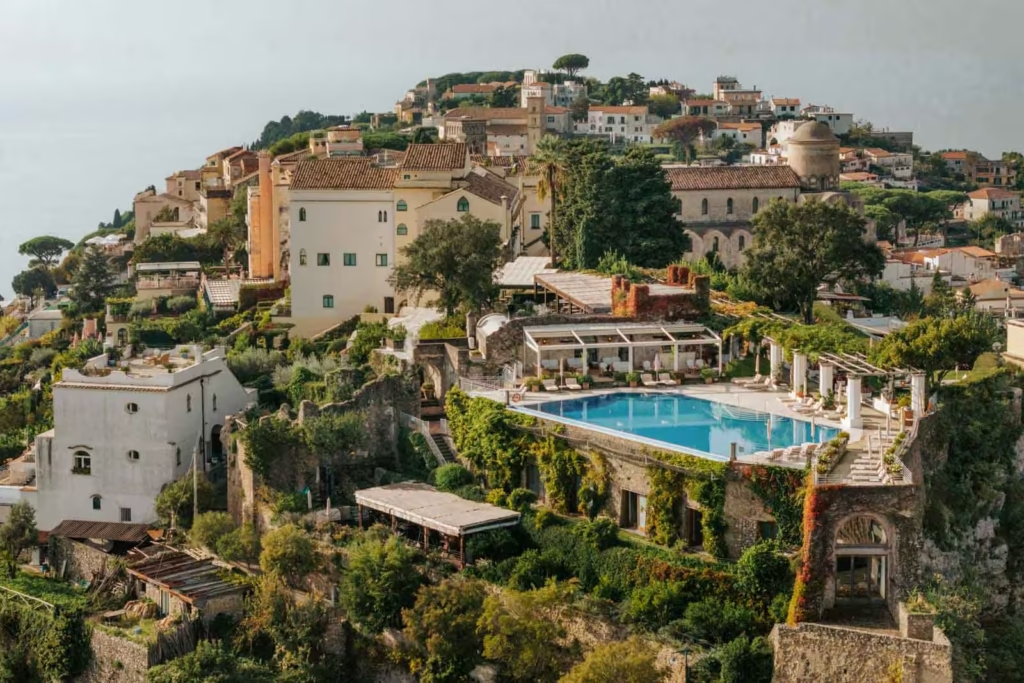
Why I love it: The infinity pool appears to hang over the sea. It is one of the most photographed pools in Italy for a reason.
An 11th-century palace at the highest point of Ravello. Terraced gardens, Michelin-starred dining, and a full-hotel exclusive buyout are available. June and September are the most requested months. Start enquiries at least 18 months out.
VILLA MAGIA — Positano
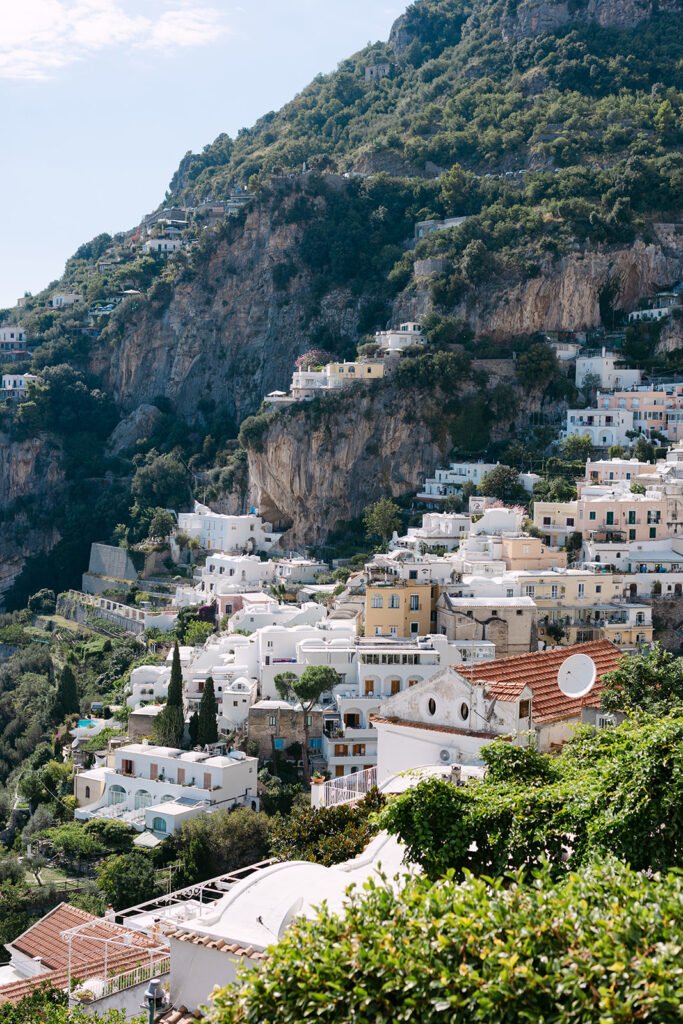
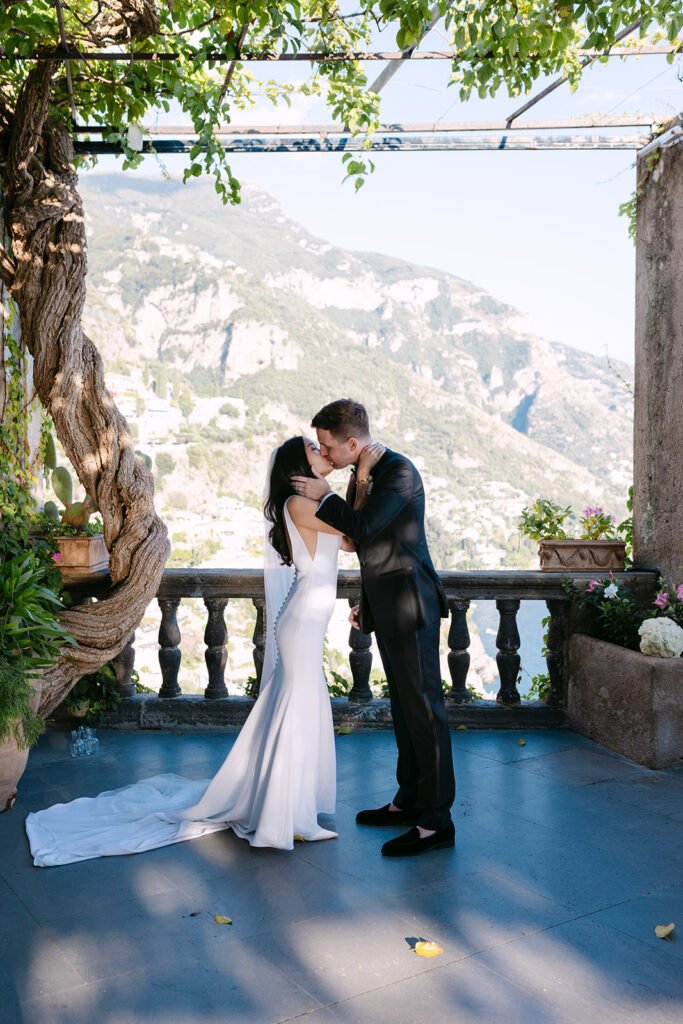
For whom: Couples who want an intimate boutique property with real personality
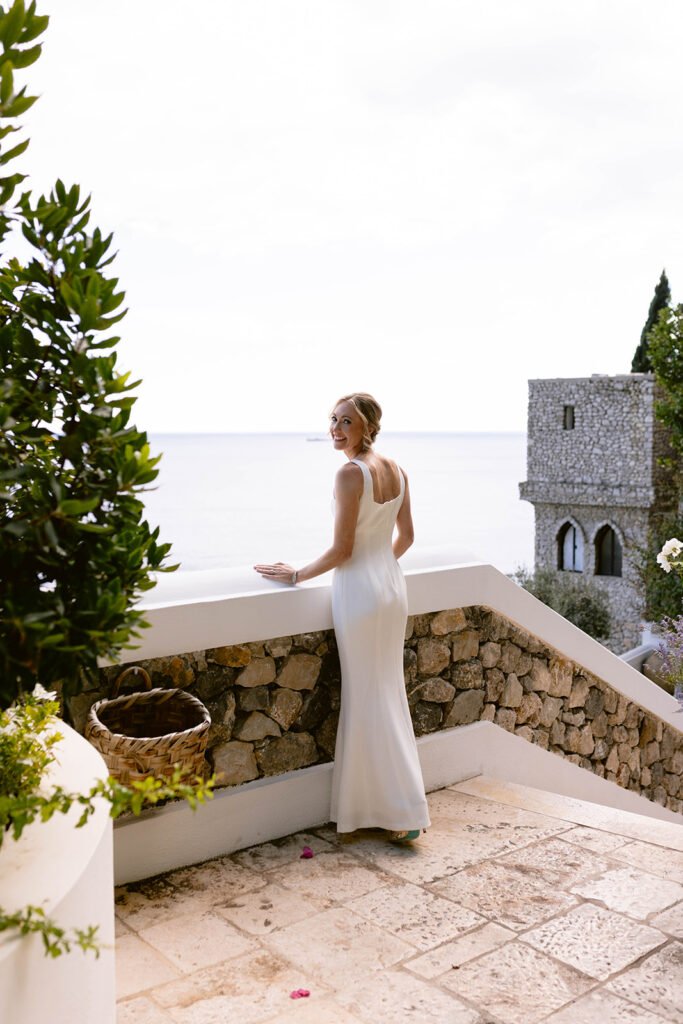
Why I love it: Originally an 18th-century watchtower, 12 suites personally curated by the family who owns it. Nothing here feels like a hotel.
Capacity up to 80 guests on exclusive hire. The family has run it since the 1990s, and it shows in the details. Three floors of terraces, all facing the Gulf of Positano.
GOOD TO KNOW: Positano is not recommended for guests with mobility requirements — terraces are all connected by staircases. Plan arrivals carefully.
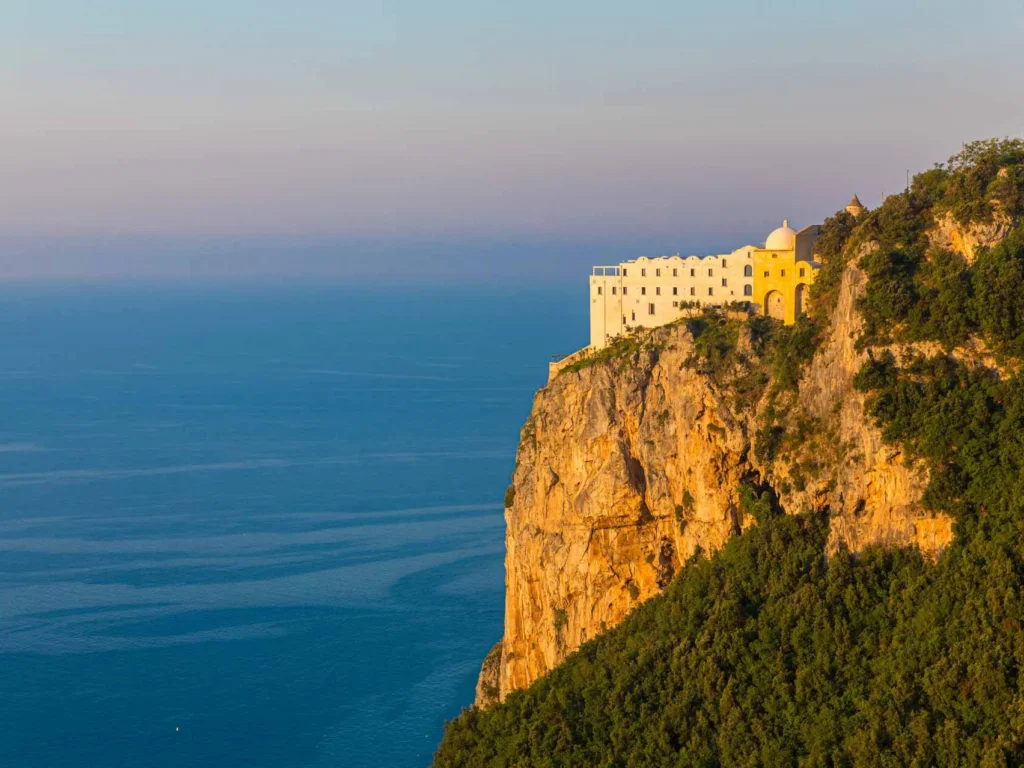
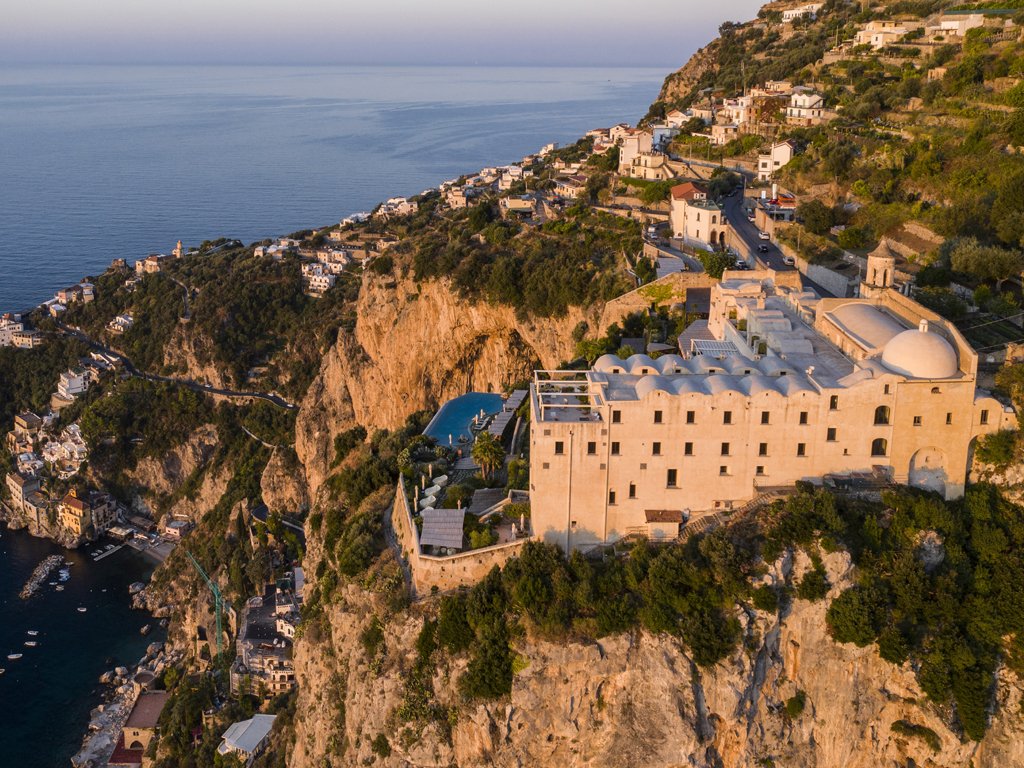
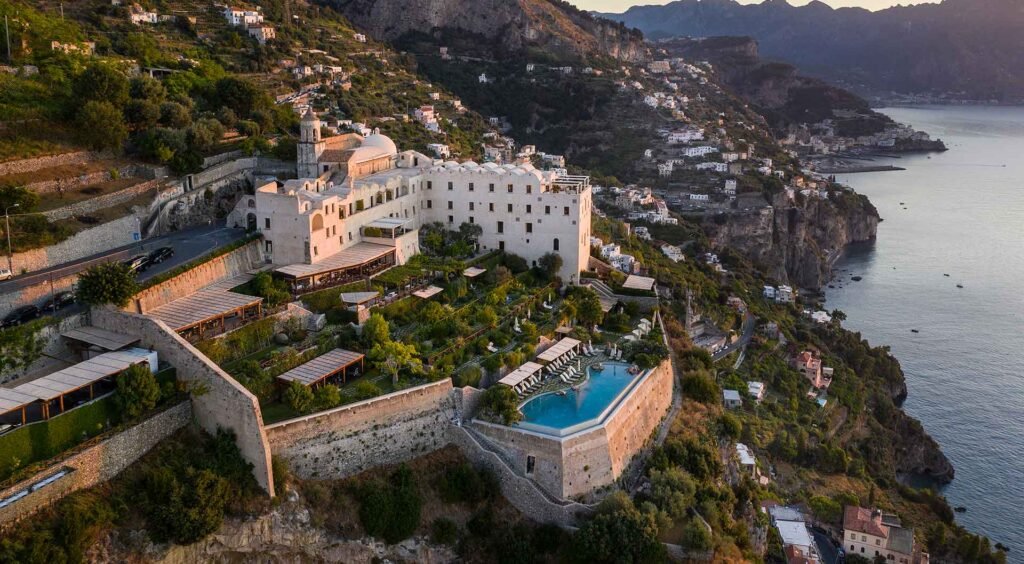
MONASTERO SANTA ROSA — Conca dei Marini
For whom: Couples who want genuine seclusion between Positano and Amalfi town
Why I love it: Ten suites, cliffside terraces, a 17th-century monastery conversion that doesn’t try too hard
The quietest of the major venues on the coast. Its midpoint position means slightly easier access than either Positano or Ravello, without losing the drama. Best for intimate ceremonies where atmosphere matters more than capacity.
When to Get Married on the Amalfi Coast
Late April to June brings mild temperatures, blooming lemon groves, and a coast that hasn’t reached peak tourist density. May is the standout month for photography — the sun angle is lower, the light stays soft longer, and the gardens are at their fullest.
September to early October is my personal preference. The tourist wave has passed, the coast quietens down, the light shifts to a warmer, lower angle, and the whole place feels more like itself. One couple who came to me for their Amalfi Coast wedding in September described the gallery as having more images to keep than they could reasonably choose between.
July and August is peak season. Long days, warm sea, full energy. Also: maximum crowds, maximum heat, maximum prices, and roads that can add significant time to any vendor transfer. It works — but it asks more of everyone.Winter (November to March) offers lower prices and a genuinely deserted coast. Some venues close entirely. For couples open to the unexpected, it can produce extraordinary images.
What You Need to Know Before You Start Planning
The budget reality. The Amalfi Coast is one of Italy’s most expensive wedding destinations. A high-end destination wedding here for 50 guests typically ranges from €50,000 to €90,000 — venue hire, catering, florals, planner fees, and accommodation combined. Full multi-day events at the major Ravello properties start at significantly higher rates.
Logistics are real. Roads are narrow. Parking is limited. Experienced porterage staff hand-carry flowers, equipment, and furniture up stairways that vehicles cannot reach. There is more on this in this Amalfi Coast wedding planning guide.
Curfew. Most venues require outdoor music to cease by midnight. If you want to keep dancing, plan an afterparty at a nearby venue.
Legal ceremonies. A legally recognised civil ceremony in Italy requires a Nulla Osta from your home country, legalised or apostilled, submitted to the local Comune. Most international couples complete their legal registration at home and celebrate with a symbolic ceremony in Italy — this opens up significantly more venue options.
Photographer and venue are linked decisions. Each venue behaves differently as a photographic environment. Villa Cimbrone’s terrace is exceptional at 5 pm and difficult at noon. Monastero Santa Rosa’s north-facing terraces give more consistent light throughout the day. Working as an Italian wedding photographer across the Amalfi Coast over multiple seasons shapes not just the images but the entire day’s schedule.
The Amalfi Coast delivers when you approach it knowing what you are working with. The venues are extraordinary. The logistics require experience. And the photographs are better when the person taking them has stood on those specific terraces before.If you are starting to think seriously about your photographer for a wedding on the Amalfi Coast, I would love to hear about it. The best place to start is here.
Frequently Asked Questions
The most consistently requested venues are Villa Cimbrone and Belmond Hotel Caruso in Ravello, Villa Magia and Le Sirenuse in Positano, Palazzo Avino in Ravello, Monastero Santa Rosa in Conca dei Marini, and the Grand Hotel Convento di Amalfi. Villa Cimbrone and Belmond Hotel Caruso book out earliest — couples targeting those properties should start enquiries at least 18 months before their preferred date.
Yes, but it requires advanced paperwork. You typically need a Nulla Osta from your home country, legalised or apostilled, submitted to the local Comune. Civil ceremonies are only permitted in licensed venues or at civil registry offices — not every private villa qualifies. Most international couples register legally at home and hold a symbolic ceremony in Italy, which simplifies logistics and opens up more venue options.
Late April to June and September to early October are the most recommended windows. Spring offers mild temperatures, blooming gardens, and manageable crowds. Early autumn brings softer, warmer light and a coast past its tourist peak. July and August are high-season: energetic, photogenic, and significantly more expensive and crowded. September is the single strongest month for photography conditions.
12 to 18 months minimum for most well-known venues. Belmond Hotel Caruso, Villa Cimbrone, and Palazzo Avino often commit two years out for September dates. Waiting until under a year before the date significantly narrows the options — particularly for full-property exclusive hire.
A civil ceremony is legally recognised in Italy and requires formal documentation, Comune approval, and a licensed venue. A symbolic ceremony has no legal standing but can take place at almost any venue without official paperwork — including private villa terraces and hotel gardens. Most international couples complete their legal registration at home and celebrate symbolically in Italy, removing a layer of bureaucracy and allowing much greater venue flexibility.