

The Complete Guide to Planning a Destination Wedding in Italy
Italy is not a backdrop. It is a participant.
The light does something particular here — it softens the edges of stone walls, olive trees, the long lines of a hillside in late afternoon. That quality is not decorative. It is the reason couples return to their Italian photographs for the rest of their lives, long after the details of the day have blurred.
But there is another Italy — the one that exists before the ceremony. The one made of timelines, paperwork, vendor coordination, and decisions about regions you may never have visited. Most guides skip over it in favour of the beautiful imagery. This one covers both.
Whether you are drawn to Tuscany’s rolling hills, the dramatic cliffs of the Amalfi Coast, or the quieter rhythms of Puglia, planning a destination wedding in Italy rewards the couples who understand what the process actually involves — and who invest that understanding early.
Why Couples Choose Italy – and What That Choice Actually Means


More than 15,000 foreign couples married in Italy in 2024 — a number that has grown every year since 2021. Italy offers something no single competitor has replicated: art, history, landscape, food, and a culture built around the unhurried afternoon. For guests, an Italian wedding is a holiday. For the couple, it is a considered statement of what matters.
The shift happening across the industry in 2026 confirms this direction. Couples are moving away from single-day events toward multi-day celebrations — welcome dinners, relaxed mornings, farewell brunches. What planners are calling slow luxury: fewer guests, more intentional experiences, private villa stays where the garden becomes the dining room.
What this means for every vendor decision
A multi-day format changes the brief for every person working your wedding. The caterer plans three meals, not one. The planner coordinates arrivals across several days. The photographer has time to learn the light, the venue, and the couple before the ceremony day arrives, which produces a richer, more layered body of work.
The format also changes how a destination wedding in Italy is budgeted. Spreading the celebration across two or three days often costs differently, not necessarily more. Understanding this early shapes every choice that follows.
How to Choose the Right Region for Your Wedding in Italy
The single most important early decision is not the venue — it is the region. Each part of Italy carries a distinct character, pace, and visual language. Choose well, and the location stops being a backdrop and starts being part of the story.
Tuscany — versatile, well-connected, the benchmark
Tuscany remains the most requested region for destination weddings. Its appeal is rooted in versatility: it works for intimate elopements, gatherings of thirty, and weekend celebrations of a hundred. The visual language — cypress lines, warm stone, golden-hour light that arrives early and lingers — is the most recognisable in Europe. Florence and Pisa airports serve major international routes. Private transfers to rural properties are straightforward. George has documented weddings across the region, including at Villa Petriolo in Tuscany — a setting that captures the particular stillness of the Tuscan countryside on a wedding morning.
The best areas within Tuscany for weddings are the Val d’Orcia, the Chianti hills between Florence and Siena, and the coastal Maremma. The Val d’Orcia is the most cinematic. Chianti is the most social. The Maremma is quieter, wilder, and increasingly sought-after by couples who want something less photographed.
The Amalfi Coast — dramatic and logistically demanding
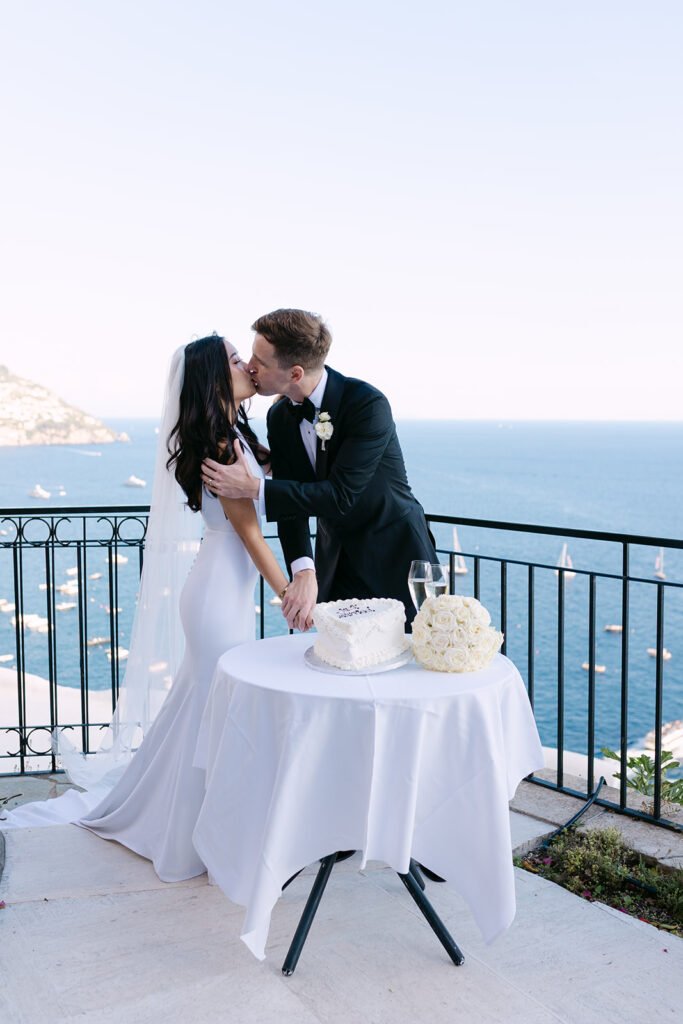
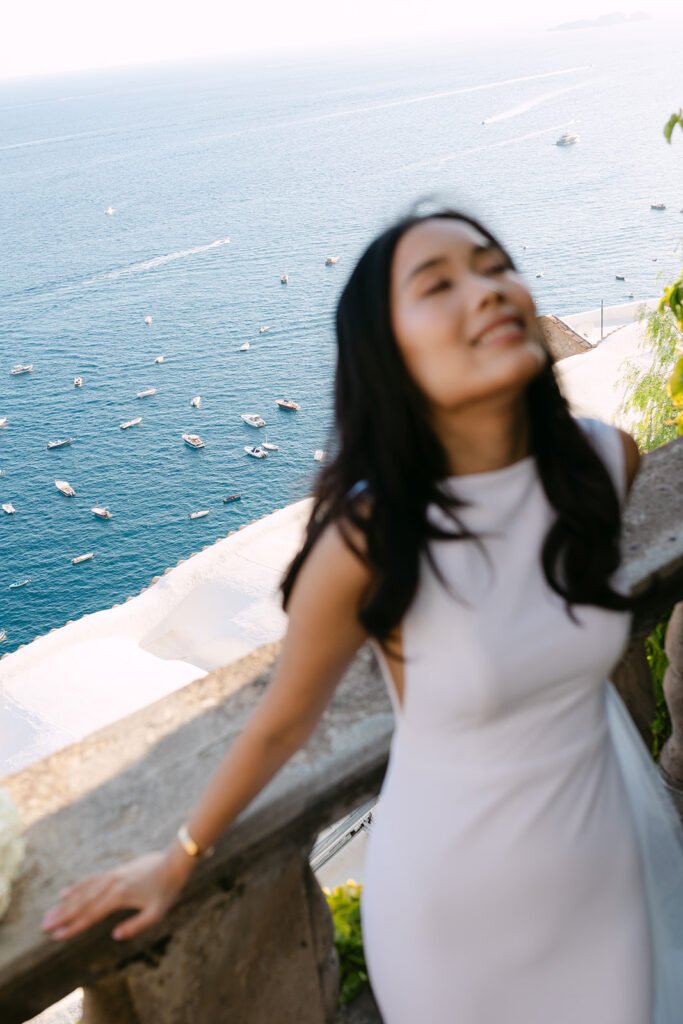
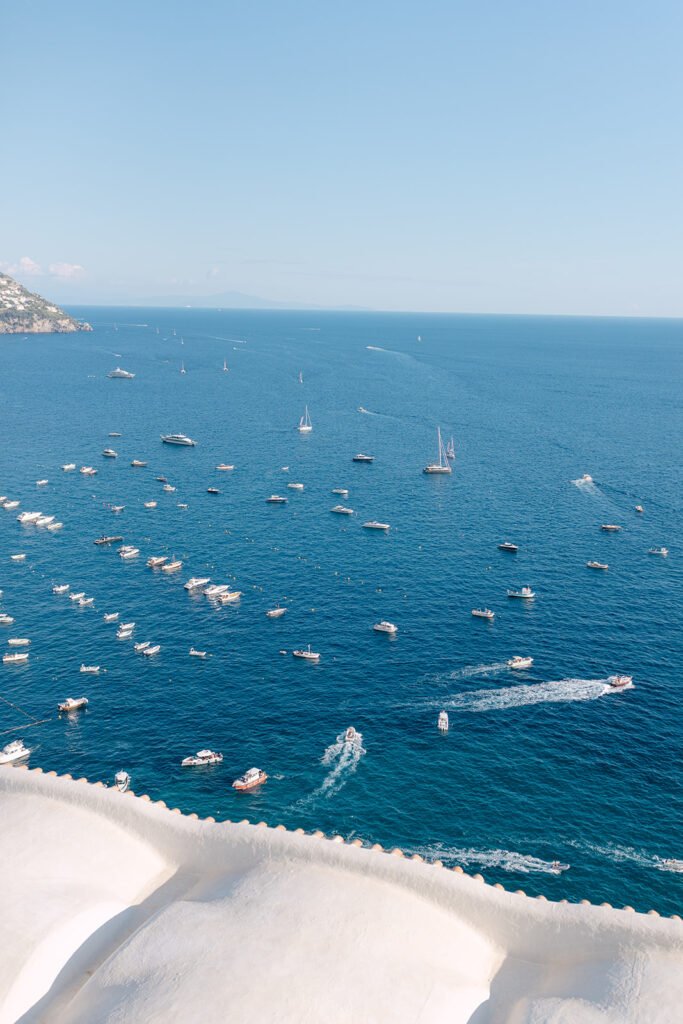
The Amalfi Coast delivers the kind of views that stop a conversation. Terraced cliffs, the particular blue of the Tyrrhenian Sea, lemon groves on every available slope. Ravello sits elevated above all of it — cool, quiet, with a scale that suits intimate celebrations more than large ones. Villa Magia in Positano rewards the effort with a setting unlike anywhere else in Italy.
The honest caveat: the Amalfi Coast is demanding. The road is narrow and slow. Guest transfers require careful planning — and a meaningful budget. Couples who underestimate the logistics regret it. If the views matter more than the ease, choose the coast. If you want both, Ravello tends to offer more than Positano — quieter, with fewer crowds and a longer ceremony window before the day-trippers arrive.
The Italian Lakes — two different propositions
Lake Como and Lake Garda are often discussed together. They should not be. Lake Como is Italy’s most prestigious lake destination — grand hotels, historic villas, and a scale that rewards large celebrations. In 2026, it carries one practical caveat: tightened regulations on late-night music have redirected some couples toward private estates and venues without curfew. Confirm restrictions before committing to any Como property.
Lake Garda is the more flexible alternative. Easier airport access via Verona and Bergamo, a wider range of venue types, fewer restrictions on evening hours. The visual register is different — less overtly grand, more varied in character — but for couples who want the lake experience without the choreography, Garda is worth serious consideration.
Puglia and Sicily — the south rewriting the script
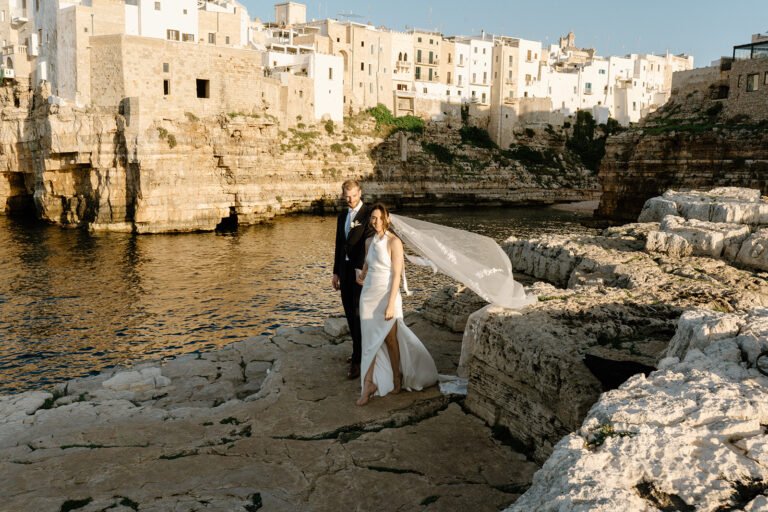
The South has been rewriting the script for several years. Puglia — with its ancient masserie, whitewashed hilltowns, and a quality of light that arrives from a different angle — has become the destination of choice for couples who want their wedding to feel genuinely rooted in place. Masseria Le Torri is a good example of what the region does well: a working estate that becomes a private world for three days.
Sicily is the fastest-growing destination on the Italian wedding circuit for 2026. Taormina and the countryside around Noto draw couples seeking something bolder — more colour, more contrast, a stronger cultural identity in the landscape. Venues here are less internationally known, which means availability remains good and dates are easier to secure than in Tuscany or Como.
How Far in Advance Do You Need to Book a Wedding in Italy?
The standard answer from planners working in Italy is 12 to 18 months. For peak season — May through early July, and September through October — the better venues and most sought-after photographers fill earlier than that. Some couples begin the process two years out, particularly for popular Saturdays at known Tuscany or Lake Como properties.
The booking window varies significantly by vendor type. Venues often require a deposit 12 to 18 months ahead. Photographers with a deliberately limited calendar may be fully booked 18 months to two years in advance for peak dates. Planners and caterers typically have more flexibility — but still reward early contact.
| The couples who feel most at ease on their wedding day are usually the ones who gave themselves the most time beforehand — not to over-plan, but to plan well and then let go. |
If you are working with a shorter timeline, it is not impossible — but it requires flexibility on date and location. Shoulder season (April, early May, late September, October) offers excellent light and considerably more availability. November through March is genuinely underused — and in the right region, quietly extraordinary.
What Does a Destination Wedding in Italy Actually Cost?
The honest answer: it depends on choices more than location. Italy is not categorically more or less expensive than other European destinations — but certain elements carry a premium, and knowing where to invest versus where to trim makes a significant difference.
The broad ranges
An elopement in Italy — two people, a symbolic ceremony, a photographer, one or two days — typically begins around €8,000 to €15,000, depending on region and photographer. A micro wedding of ten to twenty guests at a private villa, with catering, florals, and a planner, starts from €25,000 to €40,000. A full destination weekend for fifty guests at a sought-after venue in Tuscany or Lake Como moves into six figures without difficulty.
Most couples underestimate costs in two areas: transfers and catering. Both scale quickly with guest count and location. Both reward early, specific conversations with your planner before you commit to a venue or a date.
Where a considered investment makes a lasting difference
Photography is the element of a wedding that outlasts every other. The flowers are gone within a day. The food becomes a memory. The photographs are what remain — the record of how everything felt, not just how it looked. Couples who invest thoughtfully in their photographer consistently describe it as the decision they are most glad they made.
The same logic applies to the venue. A considered setting shapes the entire experience — it sets the pace, the quality of light, the sense of arrival. Spending less on florals and more on a venue with inherent character is almost always the right trade.
Do You Need to Get Legally Married in Italy?
No, and most international couples do not. There are three types of ceremony available in Italy: civil (legally binding, performed at a town hall or an approved venue), religious (the state automatically recognises Catholic ceremonies; other religions typically require a separate civil step), and symbolic. The symbolic ceremony has no legal standing in Italy but carries full personal significance — and it is chosen by the overwhelming majority of couples who travel from the US, UK, Australia, and Canada.
Why do most couples choose symbolic
The legal route in Italy involves a specific sequence: a Nulla Osta obtained through your country’s consulate in Italy, an Atto Notorio, certified translations, and coordination with the local municipality. The process adds six to eight weeks of preparation and requires at least one consulate appointment — a meaningful administrative layer for couples planning remotely.
The practical alternative: complete the legal marriage in your home country, then celebrate in Italy with a symbolic ceremony. This approach removes bureaucratic friction and opens every location in Italy as a ceremony setting — a villa terrace, a cliff above the sea, a clearing in the olive grove — with the language, the officiant, and the structure entirely your own.
| The legal part is administration. The ceremony is what matters. Most couples separate the two — and find the Italian ceremony is the better one for it. |
What a Multi-Day Wedding in Italy Looks Like in Practice
The single-day wedding is giving way to the wedding weekend — and in Italy, increasingly, the wedding week. The format has become standard among destination couples, not because it costs more, but because it produces a different quality of experience. Spreading the celebration across two or three days changes every moment within it.
The typical structure
Most multi-day Italian weddings follow a similar arc. The first day is the welcome: an informal dinner at a long table in the venue garden, an aperitivo on a terrace. Guests arrive, orient themselves, and the pressure is low. The evening ends early.
The second day is the ceremony and reception — timed around the quality of light and the heat of the day. A long aperitivo follows the ceremony, then dinner that extends into the night. The third day is the farewell: coffee, a walk through the nearest hill town, a morning that feels like it belongs to the location rather than the event.
Why the format matters for photography
A multi-day format gives the photographer time to understand the light, the venue, and the couple before the ceremony day arrives. One couple who came to George for their Amalfi Coast wedding described what surprised them most in their gallery — it was not the ceremony photographs that moved them, but the images from the welcome dinner the evening before, when the light was low and everyone was still arriving. Those frames captured something the posed portraits could not.
The documentation becomes richer because the day is richer. More quiet moments, more genuine exchanges, more of the texture of a celebration rather than its choreography.
Choosing Your Photographer for a Destination Wedding in Italy
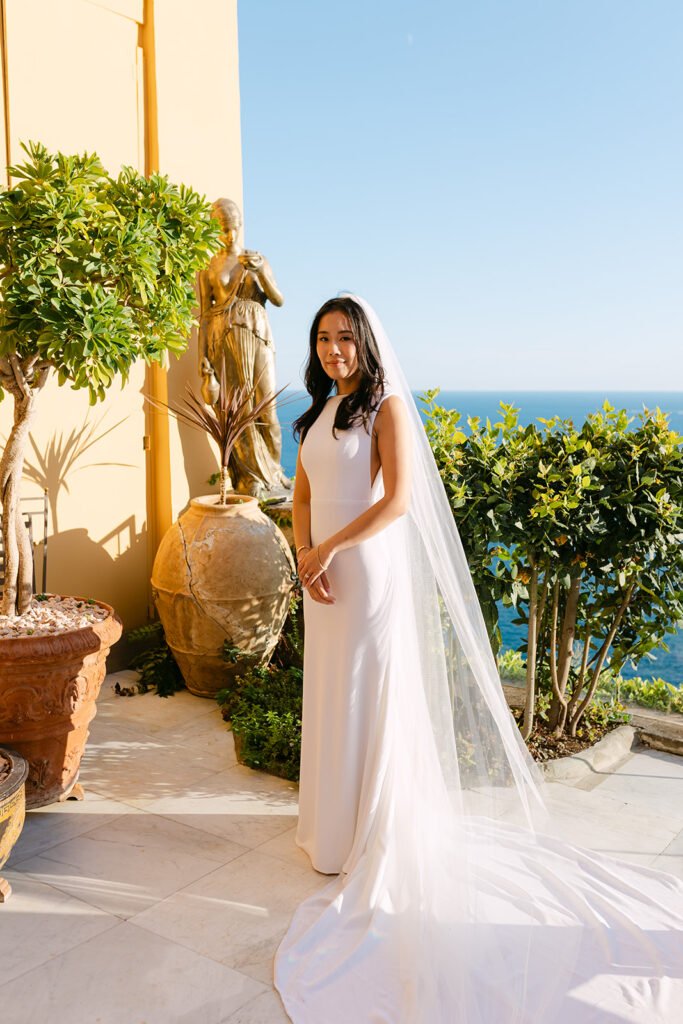
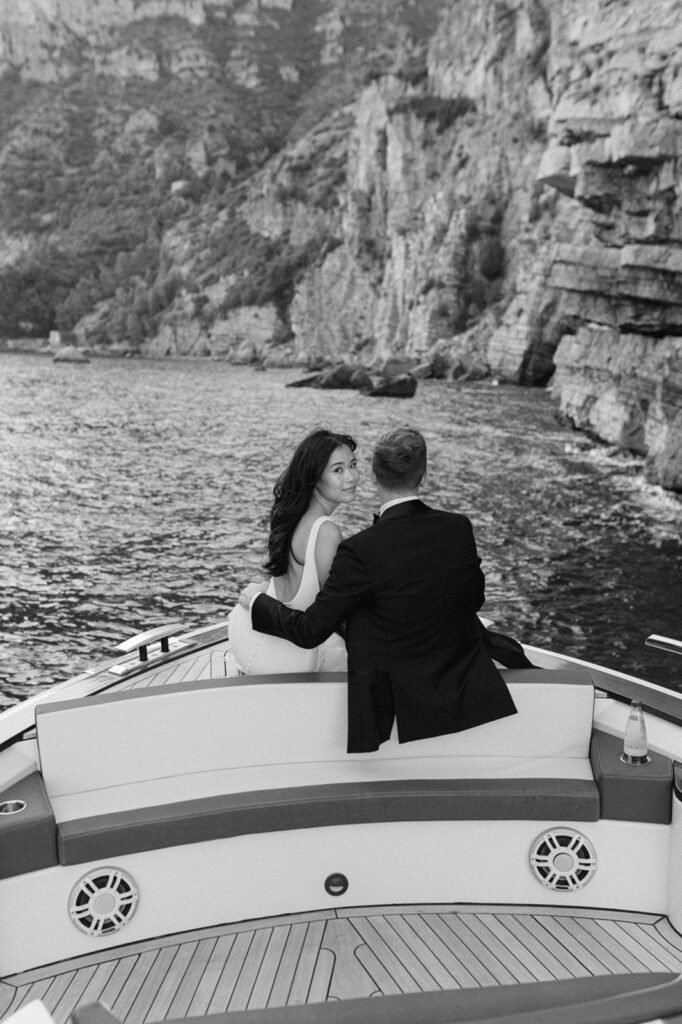
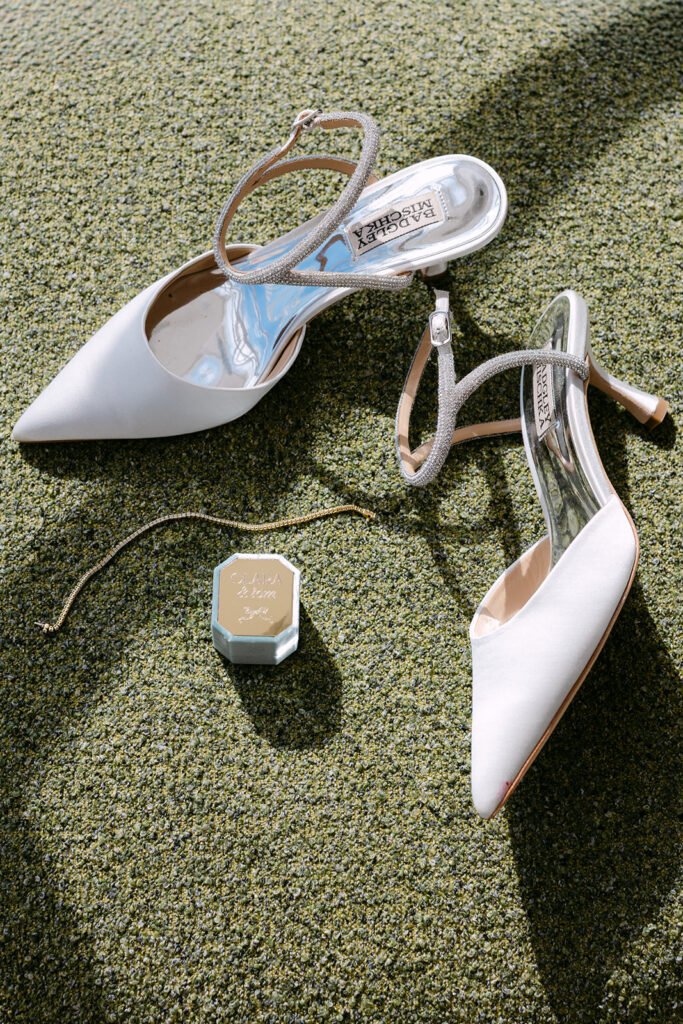
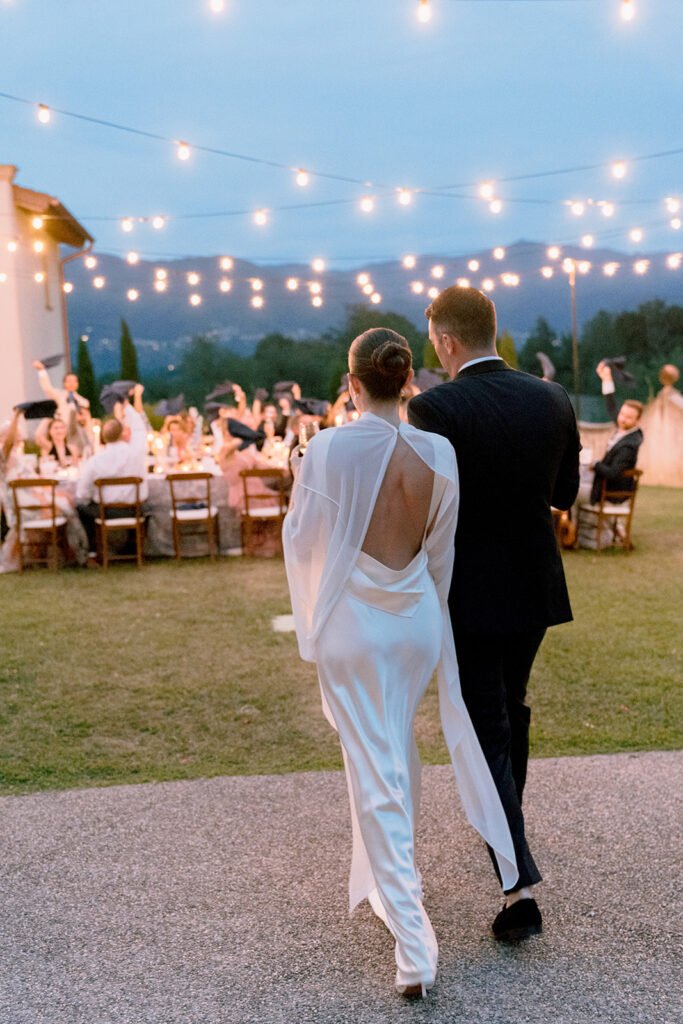
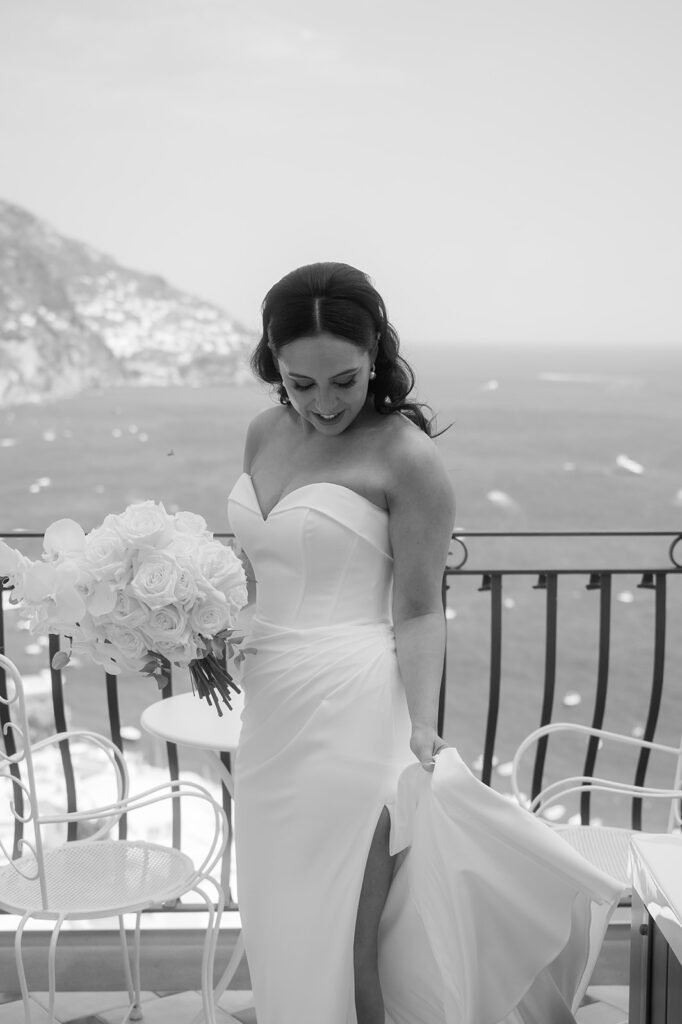
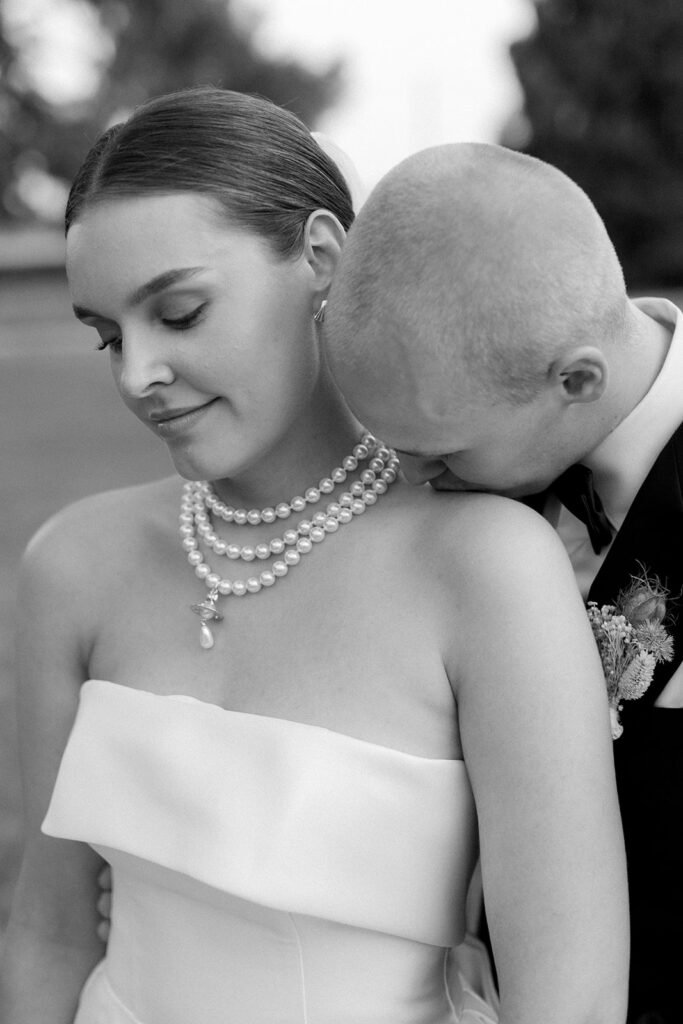
Most couples approach the photographer decision too late and with the wrong criteria. They compare portfolios when they should be comparing sensibility. They ask about pricing when they should be asking about process.
This is not the decision to make last
Your venue shapes the light. The planner manages the logistics. Your photographer determines what survives. The images are what you return to — what you show your children, what you hang on a wall, what you open on a quiet Tuesday twenty years from now. The decision deserves the same weight you give the venue.
The question to ask is not ‘do I like these photographs?’ It is ‘Does this photographer see the way I want my wedding to look?’ Consistency across a body of work matters more than individual standout images. Look for a portfolio, not a highlights reel.
What does editorial documentation mean in practice?
Editorial wedding photography is not about posed frames. It is about a particular quality of attention — the ability to be present at the right moment, read light, movement, and geometry simultaneously, to produce images that feel both spontaneous and considered. It draws from fashion and reportage in equal measure. It does not interrupt the day to create photographs. It observes the day and captures what is already there.
George Novac works in this register—combining film and digital to produce images with a visual language that endures over time. The approach means guests barely notice the camerais presence. His Italian wedding photography portfolio covers the full range: Tuscany villas, Puglia masserie, and Amalfi cliff terraces.
What couples consistently say
One couple who came to George for their destination wedding described the experience plainly: the photographs came back better than they could have imagined, and they had felt entirely at ease throughout the day. That ease is not incidental — it is the condition for the images that matter most.
Another couple, for whom George documented a Tuscany elopement, described still returning to the photographs long after the wedding — not to relive an event, but to inhabit a feeling. A third couple, whose Amalfi Coast gallery arrived with too many favourites to narrow down, described the experience as one they had not known to hope for.
Where to Begin
Italy earns its reputation not through spectacle but through specificity. The light on a particular terrace at a particular hour. The particular stillness of a long dinner in a garden that smells of stone and rosemary. The way a region gives a celebration its character before the flowers arrive.
The planning process, approached well, is not an obstacle to that experience — it is how you arrive at it with clarity rather than compromise. Choose the region before the venue. Choose the photographer before the stationery. Give yourself more time than you think you need, and then use that time to let the decisions settle rather than accumulate.
When you are ready to talk through what your destination wedding in Italy might look like — the regions, the light, the pace of it — George is available to discuss. Every conversation begins the same way: with your story.